
All Things Cars
Winter Tyres in Ireland: Do You Actually Need Them?
Irish winters are more wet and cold than snowy, which changes the answer. Here is when winter tyres genuinely make sense in Ireland, when all-season tyres are the smarter buy, and what the law and the NCT actually require.

Every October the same question comes up: should I put winter tyres on the car? In countries like Austria or Sweden the answer is simple. In Ireland, where most winter days are wet and between 2°C and 8°C rather than snowy, it depends on where you live, when you drive and what is on the car already.
The short answer
- There is no legal requirement to fit winter tyres in Ireland.
- For most drivers in towns and cities, a good set of summer tyres with healthy tread, or a quality all-season tyre, is enough.
- Winter tyres make real sense if you live in an upland or rural area, drive early in the morning on untreated roads, or regularly drive to the continent in winter.
- All-season tyres are the best compromise for a lot of Irish drivers: you fit them once and leave them on all year.
What the law says
The Road Safety Authority is clear that there is currently no law in Ireland saying you should or should not fit winter tyres. What the law does require is that every tyre is in roadworthy condition with a tread depth of at least 1.6mm across the central part of the tread.
Driving on tyres below the legal limit can bring a fixed charge and penalty points, and worn tyres are one of the most common NCT failure items. Our NCT retest guide covers what happens if tyres are flagged on the test.
Why temperature matters more than snow
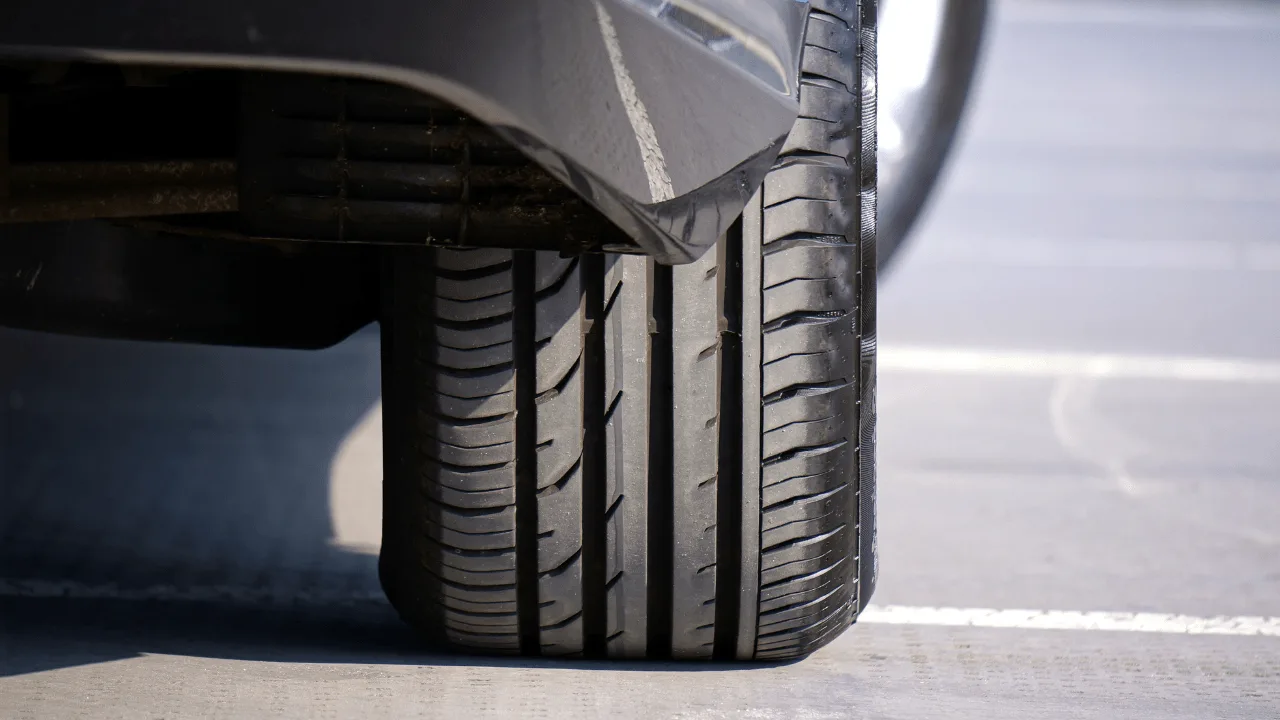
Tyre makers generally put the crossover point at around 7°C. Below that, the rubber in a standard summer tyre hardens and grips less, especially on wet roads. Winter tyres use a softer compound and a tread pattern with many small slits (sipes) that stay flexible and bite into slush and cold, wet tarmac.
That is why winter tyres are not only about snow. A frosty, damp 7am commute on a back road in January is exactly the situation they are designed for, and it is a situation many Irish drivers face for three or four months a year.
Summer vs all-season vs winter tyres
| Summer | All-season | Winter | |
|---|---|---|---|
| Best temperature range | Above 7°C | Roughly year-round in a mild climate | Below 7°C |
| Cold, wet grip | Fair | Good | Very good |
| Snow and ice | Poor | Reasonable (if 3PMSF marked) | Best |
| Warm, dry handling | Best | Good | Softer, wears faster |
| Swap twice a year? | No | No | Yes, or run a second set of wheels |
| Suits | Urban drivers, low winter mileage | Most Irish drivers | Rural, upland, early starts, continental trips |
How to spot a real winter or all-season tyre
Look at the sidewall:
- M+S (mud and snow): a manufacturer's own marking with no performance test behind it. On its own it does not make a tyre a winter tyre.
- 3PMSF (a snowflake inside a three-peaked mountain): the tyre has passed a standard snow traction test. The RSA notes that a genuine winter tyre carries the snowflake symbol in addition to M+S.
If you are buying all-season tyres for an Irish winter, insist on the 3PMSF symbol. It is the easiest way to separate proper all-season tyres from summer tyres with a marketing label.
Who should fit winter tyres in Ireland?
You are likely to benefit if two or more of these apply:
- You live on or regularly drive hilly rural roads that are not gritted, for example parts of Wicklow, Donegal, Cavan, Leitrim, Kerry or north and west Cork.
- You commute before sunrise between November and March.
- You cannot work from home on icy days and have to get to work regardless.
- You drive a powerful rear-wheel-drive car that struggles for traction in the cold.
- You drive to Europe in winter. Several countries, including Austria and Germany, require winter tyres in wintry conditions, and France requires winter equipment in mountain areas in winter, so check the rules for your route before you go.
If none of those apply, spend the money on a premium set of all-season or summer tyres instead and replace them before they reach the legal minimum.
If you do fit winter tyres
- Fit a full set of four. The RSA advises against fitting just two because mixed grip front and rear makes the car more likely to under or over steer.
- Swap back in spring. Winter tyres wear faster in warm weather. The RSA advises reinstalling your all-season or summer tyres once winter conditions have passed.
- Consider a second set of wheels. Swapping complete wheels at home is quicker and cheaper over time than paying to have tyres refitted to the same rims twice a year. Some tyre centres also offer seasonal storage.
- Tell your insurer. Winter tyres are not usually treated as a modification, but a quick call removes any doubt.
Winter tyre checks every Irish driver should do
Whatever tyres you run, cold weather affects them:
- Check pressures monthly. Tyre pressure drops as the air gets colder. A cordless tyre inflator makes this a two-minute job on the driveway.
- Check tread depth. 1.6mm is the legal minimum, but wet grip falls away well before that, so many experts suggest replacing tyres at around 3mm before winter.
- Look for cuts, bulges and cracking on the sidewalls, and check the spare or the repair kit.
- Get the car serviced before the cold sets in. Batteries, wipers and coolant all get tested by the first frost. Our guide on how often a car should be serviced explains what a winter check should cover.
Common questions
Are winter tyres a legal requirement in Ireland?
No. There is no law requiring or banning winter tyres in Ireland. All tyres must have at least 1.6mm of tread and be in roadworthy condition.
Are all-season tyres good enough for Ireland?
For most drivers, yes. A quality all-season tyre with the 3PMSF snowflake symbol handles Irish winters well and saves the cost and hassle of swapping tyres twice a year.
Will winter tyres affect my NCT?
No, provided they are the correct size and load rating for the car, in good condition and matched across each axle.
When should I fit winter tyres in Ireland?
Most people fit them in late October or November, once daytime temperatures are regularly below 7°C, and swap back in March or April.
Legal information is based on RSA guidance as of October 2026.
Keep reading
Related articles
Best Picks
Best Cordless Tyre Inflator: Top Picks and In-Depth Reviews
Discover the best cordless tyre inflators for 2024. Expert reviews, prices, and features to help you pick an inflator for your needs.
11 October 2024 · 6 min read

All Things Cars
NCT Retest: Fees, Time Limits and What Happens If You Fail
Failed the NCT? How the retest works: when it is free, when it costs €40, the 21-day booking and 30-day deadlines, Fail Dangerous results and how to pass second time.
2 October 2026 · 5 min read

All Things Cars
How Often Should a Car Be Serviced?
Learn what a car immobiliser is, how it prevents theft and common issues. Discover why every modern vehicle has one and more.
2 February 2025 · 7 min read