
All Things Cars
Motor Tax Ireland 2026: Rates, Bands and How to Tax Your Car Online
Full Irish motor tax rates for 2026 — CO2 and engine-size bands, how to tax your car online at motortax.ie, renewal PINs, arrears and off-road declarations.
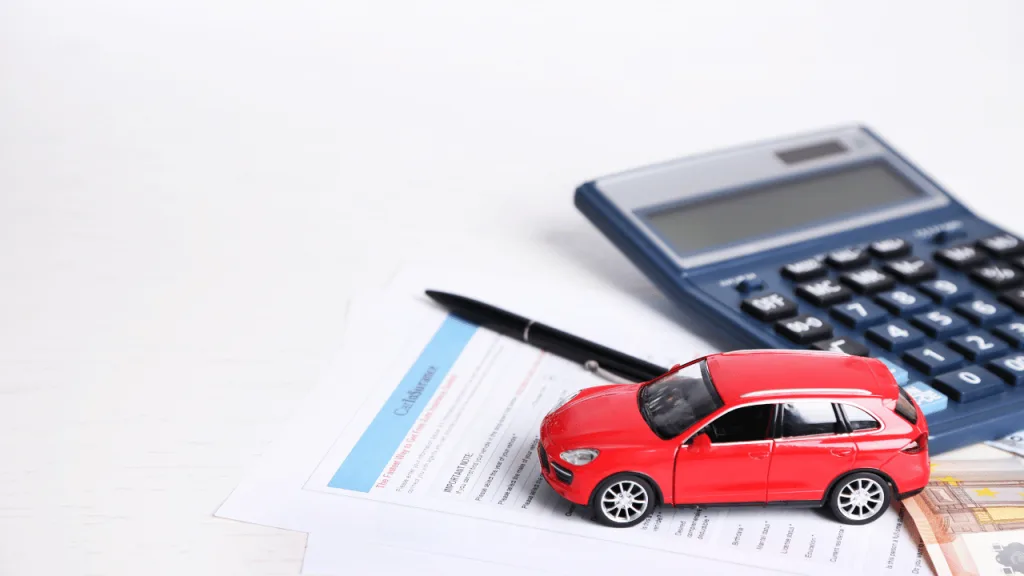
Motor tax is one of those running costs every Irish driver pays and almost nobody enjoys working out. What you pay depends on when your car was first registered, and the three different systems in use mean two identical-looking cars parked side by side can have wildly different annual bills.
This guide covers the current rates, how to tax your car online, and the traps that catch people out — late renewals, off-road declarations, and why paying in instalments quietly costs you more.
How motor tax is calculated in Ireland
There are three separate systems, and which one applies to your car is fixed permanently by its first registration date. It never changes, even when the car is sold on.
- Registered from 1 January 2021 — taxed on CO2 emissions measured under the WLTP test
- Registered 1 July 2008 to 31 December 2020 — taxed on CO2 emissions under the older NEDC test
- Registered before 1 July 2008 — taxed on engine size in cubic centimetres
This matters when you're buying. An older 2.0-litre car from 2007 can cost more than €700 a year to tax, while a modern low-emissions car of similar size might cost €190. It's worth checking before you commit — the difference over a few years of ownership can be substantial.
Motor tax rates for cars registered from January 2021 (WLTP)
Cars registered from 1 January 2021 use WLTP emissions figures, which are more realistic than the old NEDC test and produce more granular bands.
| CO2 emissions (g/km) | Annual rate |
|---|---|
| 0 (fully electric) | €120 |
| 1–50 | €140 |
| 51–80 | €150 |
| 81–90 | €160 |
| 91–100 | €170 |
| 101–110 | €180 |
| 111–120 | €190 |
| 121–130 | €200 |
| 131–140 | €210 |
| 141–150 | €270 |
| 151–160 | €280 |
| 161–170 | €420 |
| 171–190 | €600 |
| 191–200 | €790 |
| 201–225 | €1,250 |
| 226 and over | €2,400 |
Most ordinary petrol and diesel cars land somewhere between €180 and €280. The rates climb steeply above 160g/km, which is where larger SUVs and performance cars start to hurt.
Motor tax rates for cars registered July 2008 to December 2020 (NEDC)
These cars use the older NEDC emissions figures and the familiar A-to-G band letters.
| Band | CO2 emissions (g/km) | Annual rate |
|---|---|---|
| A0 | 0 | €120 |
| A1 | 1–80 | €170 |
| A2 | 81–100 | €180 |
| A3 | 101–110 | €190 |
| A4 | 111–120 | €200 |
| B1 | 121–130 | €270 |
| B2 | 131–140 | €280 |
| C | 141–155 | €400 |
| D | 156–170 | €600 |
| E | 171–190 | €790 |
| F | 191–225 | €1,250 |
| G | 226 and over | €2,400 |
This is the band most used cars on the Irish market fall into. A typical family diesel from this era sits in Band A4 or B1 — €200 to €270 a year.
Motor tax rates for cars registered before July 2008 (engine size)
Older cars are taxed purely on engine capacity, with no regard for emissions. There are 22 bands.
| Engine size (cc) | Annual rate |
|---|---|
| Up to 1,000 | €199 |
| 1,001–1,100 | €299 |
| 1,101–1,200 | €330 |
| 1,201–1,300 | €358 |
| 1,301–1,400 | €385 |
| 1,401–1,500 | €413 |
| 1,501–1,600 | €514 |
| 1,601–1,700 | €544 |
| 1,701–1,800 | €636 |
| 1,801–1,900 | €673 |
| 1,901–2,000 | €710 |
| 2,001–2,100 | €906 |
| 2,101–2,200 | €951 |
| 2,201–2,300 | €994 |
| 2,301–2,400 | €1,034 |
| 2,401–2,500 | €1,080 |
| 2,501–2,600 | €1,294 |
| 2,601–2,700 | €1,345 |
| 2,701–2,800 | €1,391 |
| 2,801–2,900 | €1,443 |
| 2,901–3,000 | €1,494 |
| 3,001 and over | €1,809 |
This is why big-engined pre-2008 cars are so cheap to buy and so expensive to keep. A 3.0-litre saloon from 2005 might cost €2,000 to buy and €1,494 a year to tax.
How to tax your car online
Most renewals can be done at motortax.ie in a few minutes. You'll need:
- Your vehicle registration number
- A PIN
- An email address
- A debit or credit card
Where to find your PIN
The PIN depends on your situation:
- Renewing — it's printed on the renewal notice posted to you in the month your tax expires
- Car you've just bought second-hand — it's the last six digits of your Vehicle Registration Certificate number (if the log book is missing, see our lost log book guide)
- New or imported vehicle — it's the last six characters of the chassis number (VIN) as printed on your RF100 form
First-time taxing can't be done online
If you're taxing a vehicle for the very first time — a brand new car, or one you've just imported — you have to do it at a Motor Tax Office rather than online. Renewals after that can be handled on the website.
Three, six or twelve months: which to choose
You can tax for 3, 6 or 12 months. The twelve-month option is always the cheapest in total.
| Period | Roughly what it costs |
|---|---|
| 12 months | The headline annual rate |
| 6 months | About 55.5% of the annual rate, twice — roughly 11% more per year |
| 3 months | About 28.25% of the annual rate, four times — roughly 13% more per year |
On a €280 band, paying quarterly costs around €36 a year more than paying annually. Not enormous, but it's money for nothing if you can manage the lump sum.
What happens if your motor tax runs out
This is where people get caught, and it's more expensive than most expect.
Arrears are charged at one tenth of the annual rate for every month the car was untaxed — and a part of a month counts as a whole month. Miss two months on a €280 band and you owe €56 in arrears on top of the tax itself.
There's no way around it either: once there's a gap between your last tax disc and today, motortax.ie will block you from renewing online. You have to sort the arrears at a Motor Tax Office.
Driving without tax is a separate matter. It carries a €60 fixed charge notice, rising to €90 if unpaid after 28 days, and a court summons after 56 days with a maximum fine of €2,000.
Declaring a car off the road (RF150)
If a car genuinely isn't being used, you can declare it off the road instead of paying tax. This is Ireland's equivalent of the UK's SORN, and it's done using form RF150.
The rules are strict:
- The declaration must be for a minimum of 3 months and a maximum of 12 months — you cannot declare a car off the road for one or two months
- It must be made in advance: either in the month your current tax expires, or within 21 days of buying or importing the vehicle
- Retrospective declarations have not been allowed since 1 July 2013 — you cannot use it to excuse a gap that has already happened
- If you owe arrears, you must clear them and tax the car for at least three months before you can declare it off the road
The car also must not be parked on a public road during the declared period. A driveway or garage is fine; the kerb outside your house is not.
Motor tax offices around Ireland
Most business can be done online or by post, but first-time taxing, arrears and some change-of-ownership matters need an office.
Cork Motor Tax Office
Cork's office is at the Business Growth Hub, County Hall Campus, Carrigrohane Road, Cork, T12 A243. It operates by appointment only, Monday to Thursday, 09:15 to 15:45. Appointments can be booked online through yourcouncil.ie or by phoning the Customer Contact Centre on (021) 4544566.
Note that it moved from its previous location, so older directions you find online may send you to the wrong place.
Other counties
Every local authority runs its own motor tax office, and several now operate on an appointment-only basis. The Department of Transport maintains a directory of local offices, and your county council website will have current hours. Dublin, Galway, Naas, Navan, Ennis and Shannon all have offices handling their own registration areas.
Common questions
Do electric cars pay motor tax in Ireland?
Yes, but at the lowest rate. Fully electric vehicles pay €120 a year, the minimum band. That applies under both the WLTP and NEDC systems.
How much is motor tax for a hybrid?
It depends on emissions rather than the fact it's a hybrid. Most plug-in hybrids fall into the 1–50g/km band at €140 a year under WLTP. A conventional hybrid with higher emissions will sit in whichever band its CO2 figure lands in — often €170 to €200. Our guide to hybrid cars covers the models available in Ireland.
Can I check my motor tax rate before buying a car?
Yes, and you should. You can look up the rate by registration number on motortax.ie. It's worth doing before committing to any second-hand cars, because an older large-engined car can carry a tax bill several times higher than a newer equivalent.
Is motor tax the same as insurance or the NCT?
No, they're three separate obligations. Motor tax is paid to your local authority, car insurance is a legal requirement bought from an insurer, and the NCT is a roadworthiness test. You need all three to legally drive on Irish roads.
What if I've sold the car?
Motor tax doesn't automatically transfer. The seller should notify the change of ownership, and the new owner taxes the vehicle in their own name. If you're selling, our guide on how much your car is worth covers what affects the price you'll get.
Can I get a refund on unused motor tax?
Yes, in specific circumstances — if the vehicle is scrapped, exported, stolen and not recovered, or off the road due to illness or absence abroad. Refunds are claimed on form RF120 at your Motor Tax Office, and you need at least three unexpired whole calendar months remaining.
The short version
Check which system applies to your car before anything else — registration date decides everything. Pay for twelve months if you can, because instalments quietly add 11–13% a year. And if the car is going off the road, file the RF150 before the tax runs out, because you cannot fix it afterwards.
Rates are set in the annual Budget, so it's worth checking motortax.ie for the current figure on your own registration before you renew.
Keep reading
Related articles
All Things Cars
What to Bring to the NCT: The Complete 2026 Checklist
Exactly what documents and preparation the NCT requires, straight from the official NCTS checklist — plus the details that get cars turned away on the day.
1 September 2026 · 9 min read

All Things Cars
Eye Test for a Driving Licence in Ireland: When You Actually Need One
Most Irish drivers do not need an eyesight report to renew a licence. Here are the three situations where the NDLS actually requires one, and how to get it.
27 August 2026 · 5 min read
All Things Cars
EV Charger Installation in Ireland 2026: Costs, the SEAI Grant and Choosing a Charger
What a home EV charger costs to install in Ireland, how the €300 SEAI grant works, and how to choose between Zappi, Ohme, Easee and Wallbox.
27 August 2026 · 6 min read